
Every January the same call comes in: a brown stain spreading across a bedroom ceiling, water tracking down the inside of a window, and a ridge of ice sitting on the gutter line. Here is what is actually happening on your roof and what to do about it.
How an ice dam forms
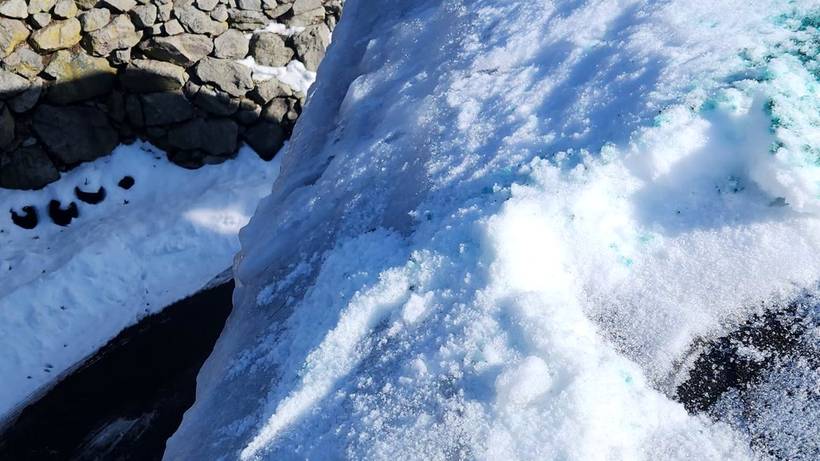
Heat escapes from the house into the attic. It warms the roof deck from underneath, snow melts higher up on the roof, the meltwater runs down to the eaves, and the eaves are cold because there is no heated space below them. The water refreezes right at the gutter line. Do that for a few days and you have a dam. The next round of meltwater has nowhere to go, so it backs up under the shingles and into the wall.
In Boston housing stock, ice dams are almost always an attic insulation and ventilation problem wearing a roofing costume. Triple-deckers, capes, and older colonials in West Roxbury, Dorchester, Quincy, and Brookline were built before anyone cared about attic air sealing. Recessed lights, bath fans that dump into the attic, and thin insulation all feed the cycle.
What the damage looks like inside
- Ceiling stains along exterior walls, usually the first sign
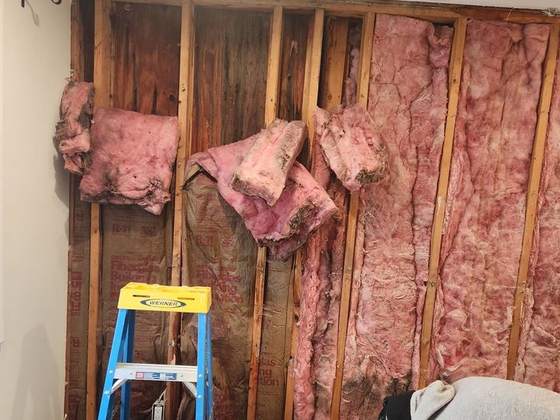
- Wet insulation in the attic, which stops insulating and starts growing mold
- Peeling paint and bubbling plaster on the top floor
- Water inside window frames and behind exterior trim
- In bad years, saturated drywall that has to come out
Do not do this
Do not let anyone chip at an ice dam with a hammer, an axe, or a shovel. We get called to repair roofs every spring that were fine before someone attacked the ice. Rock salt on the roof is nearly as bad: it eats shingles, corrodes gutters, and kills whatever is planted below the downspout.
How we remove ice dams
We use low-pressure steam. Steam melts channels through the ice and releases it from the shingles without cutting into the roof. It is slower than a pressure washer, and that is the point: a pressure washer at 3,000 PSI will strip granules off asphalt shingles and shorten the life of the roof. On a recent West Roxbury job, the homeowner had water coming through two bedroom ceilings. We steamed the dam off the same day, dried the attic insulation with air movers, and repaired the ceilings the following week.
Fixing the cause
Ice dam removal stops the leak. It does not stop the next dam. If you have had one, plan on an attic assessment before next winter: air seal the ceiling plane, bring the insulation up to current code depth, and make sure the soffit and ridge vents actually move air. That work is a fraction of what an interior water damage claim costs, and it lowers the heating bill every month.
Is it covered by insurance?
Usually the interior damage is, because it is sudden water intrusion. The removal itself and the insulation upgrade usually are not. Photograph the stains and the ice before anything is touched, and call us before you call the carrier so the drying starts on day one and the scope is written the way adjusters expect to see it.
Call (617) 642-2617. We steam ice dams and repair the interior damage across Greater Boston and the South Shore.
Call (617) 642-2617