
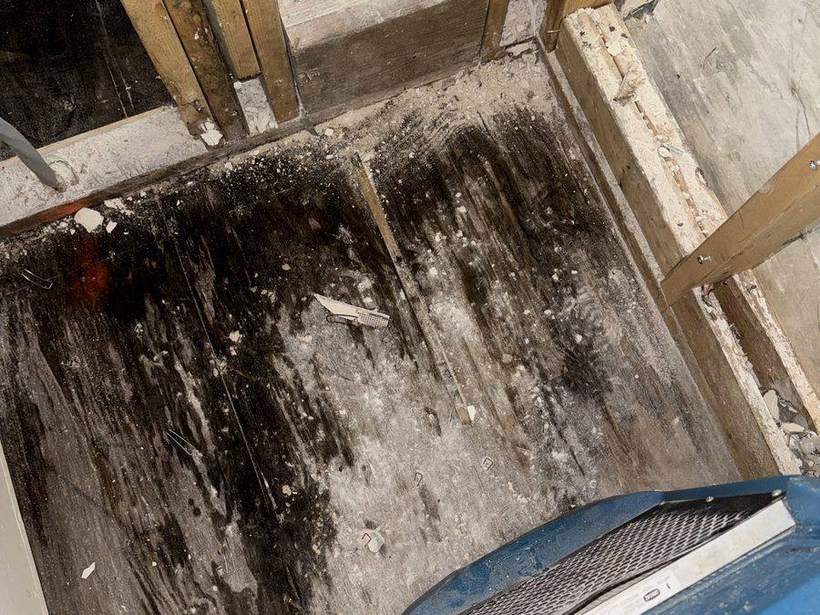
Burst pipes get the attention. The slow leak under a dishwasher, behind a toilet, or at a refrigerator line does far more damage per dollar, because it works for weeks before anyone notices. This is what we found under one Boston kitchen floor.
How it starts
A compression fitting weeps a few drops an hour. A wax ring under a toilet gives up. A dishwasher supply line pinholes. None of these make a sound and none of them leave a puddle you would see, because the water goes straight down into the subfloor and the ceiling cavity below.
What two weeks looks like
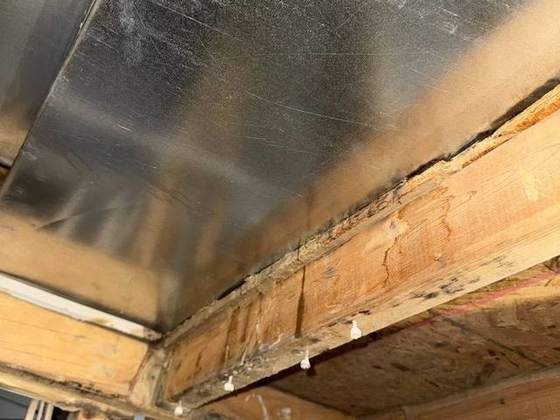
We pulled up vinyl plank in a kitchen where the homeowner had noticed a soft spot near the sink. The plank looked fine. The plywood under it was black, swollen to almost twice its thickness at the seams, and delaminating in sheets. The joists below were wet to the touch. Mold had started along the joist bays. The leak was a dishwasher supply fitting, and the homeowner's best guess was that it had been going for two to three weeks.
That is the pattern. By the time a slow leak shows itself as a soft floor, a cupped board, a musty smell, or a stain on the ceiling below, the structure underneath has been wet long enough for mold to establish. At that point it is a water damage job and a mold remediation job at the same time.
Signs to check for this weekend
- A floor that feels soft, springy, or uneven near a sink, toilet, tub, fridge, or washer
- Cupping or lifting at the edges of wood or laminate flooring
- A musty smell in a kitchen or bath that does not clear with cleaning
- A ceiling stain on the floor below a bathroom or kitchen
- A water bill that crept up with no change in use
What we do when we find one
Stop the source, meter the moisture in the floor and the cavity below, and open only what is wet. Wet subfloor comes out. Joists are dried with air movers and dehumidifiers, and treated if there is growth. Then the floor is rebuilt. If the water has been there long enough, this is a covered insurance loss in most cases, and we document moisture readings from the first visit so the claim holds up.
The cheap version of this story
Braided stainless supply lines on every fixture, a leak sensor under the dishwasher and behind the fridge, and a look under every sink once a month. Twenty dollars of prevention against a floor replacement.
Call (617) 642-2617. We meter it, tell you what is wet, and only open what needs to come out.
Call (617) 642-2617