
A ramp bolted to the front steps is not accessibility. A walkway that a person can use every day, in every season, with a walker or a chair, takes grading, drainage, and surface choices that most contractors skip. Here is what went into a recent Randolph project.
Start with the slope
ADA guidance for ramps is a maximum 1:12 slope, one inch of rise for every twelve inches of run. For a home, that number is a ceiling, not a target. Anyone pushing a chair up a 1:12 grade in February is working hard. When the site allows it, we grade shallower, and we break long runs with level landings so there is somewhere to rest and to turn.
Surface matters more than people think
Loose gravel, stamped concrete with deep texture, and pavers with wide joints all catch wheels and walker tips. For the Randolph walkway we used a broom-finished concrete surface with tight control joints: enough texture for traction when wet, smooth enough to roll on. Edges are curbed so a wheel cannot drop off the side.
Drainage decides whether it works in winter
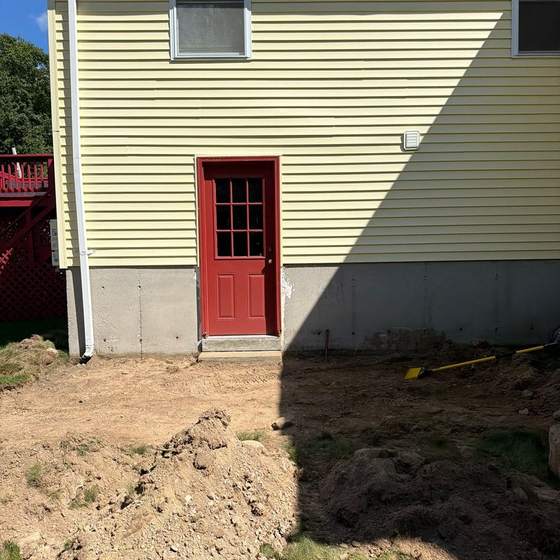
Water that sits on a walkway becomes ice. The walkway needs to be pitched slightly to one side, with the ground beside it graded so runoff moves away from the path and away from the foundation. On the Randolph job we regraded the yard along the walkway and added a drain at the low point before a single form was set.
Railings and lighting
Continuous handrails on any sloped section, at a height a seated person and a standing person can both use, and graspable, which rules out most decorative railings. Low-level lighting along the path so the edges are visible after dark. Both of these are cheap during construction and expensive to add later.
Getting it funded
Massachusetts has a Home Modification Loan Program that offers low and no-interest loans for accessibility work on owner-occupied homes. Some long-term care policies and Veterans Affairs programs cover home modifications as well. We write the scope in enough detail that it can be submitted to any of these programs.
The Randolph result
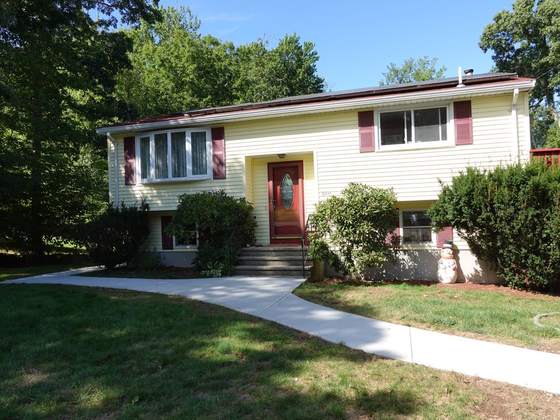
The homeowner went from needing help to get from the driveway to the front door to doing it alone, in a chair, in the rain. That is the standard we build to: not that a walkway meets a spec, but that the person uses it without thinking about it.
Call (617) 642-2617 or book a free assessment. We design and build accessible walkways, ramps, and entries across Greater Boston and the South Shore.
Call (617) 642-2617